Five AI Agents Automating Complaint Processing in MedTech

SmarteevaAI: Five AI Agents That Run Inside Your Post-Market Surveillance Workflow
What is SmarteevaAI?
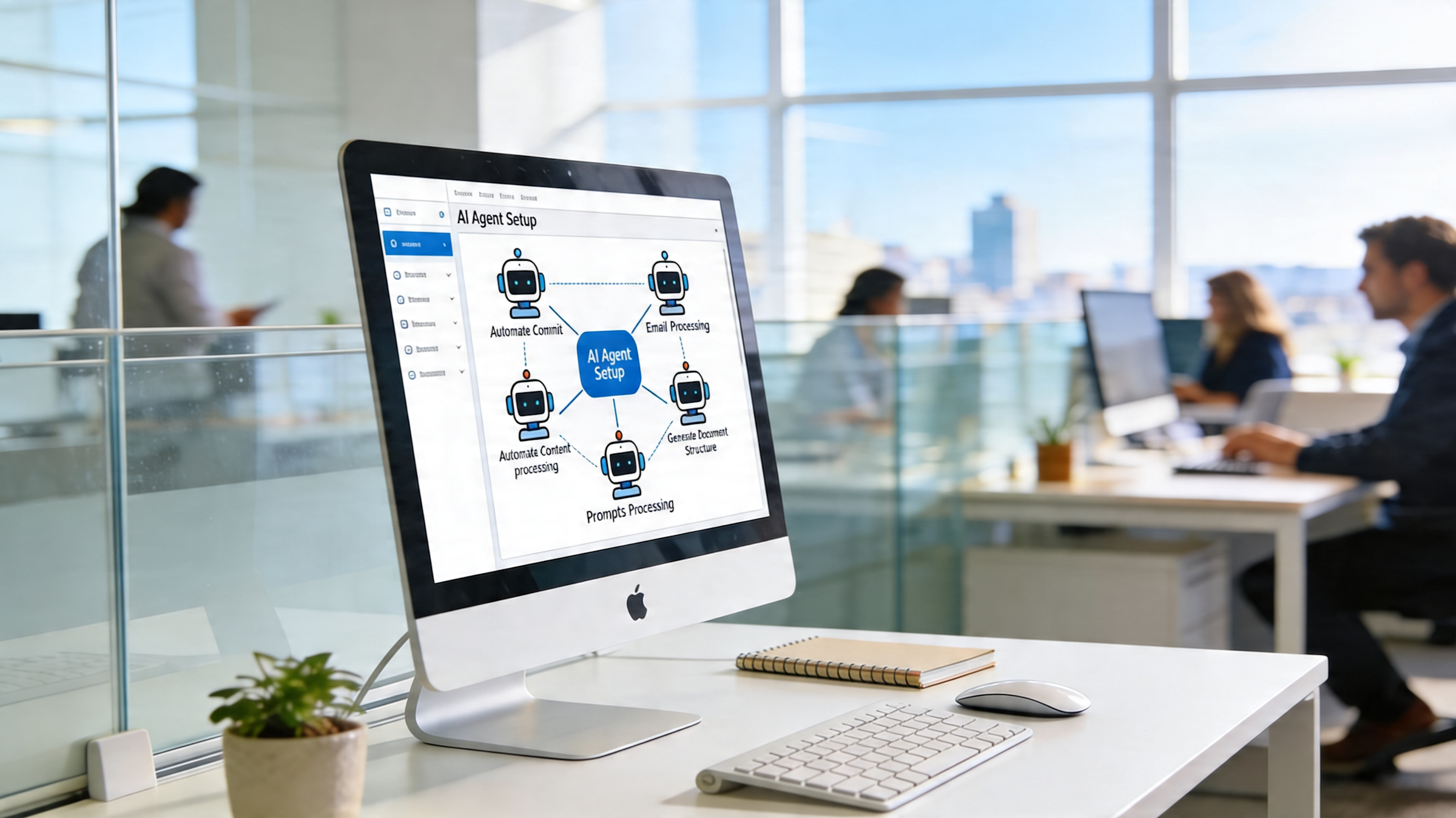
SmarteevaAI is a set of five AI agents built into Smarteeva’s post-market surveillance platform. Each agent handles a specific task that regulatory and quality teams currently do by hand: summarizing complaint records, extracting data from unstructured text, translating and mapping foreign-language complaints, converting paper forms into digital records, and finding similar complaints across the database.
The agents are not wrappers around a third-party API. SmarteevaAI processes raw complaint data through three stages before any agent acts on it. Pre-processing normalizes incoming data from emails, PDFs, images, and structured forms into a consistent format the models can read. Semantic analysis identifies the meaning and context of complaint text, not just keywords. This is what allows the agents to understand that “device stopped working during procedure” and “product failure mid-use” describe the same event. Exploratory data analysis detects trends and correlations across complaint history, giving the agents a baseline to work from when flagging anomalies or matching similar records.
The models are fine-tuned on medical device complaint data, not general-purpose text. This is why SmarteevaAI’s extraction accuracy reaches 96% on first pass. A generic LLM cannot match that on regulatory content without domain-specific training.
Clients can choose their LLM provider, fine-tune models to their specific product portfolio, or build custom RAG frameworks within the platform. None of this requires developer support.
Why complaint teams need purpose-built AI agents
The average MedTech complaint team handles thousands of incoming records per year. Each one involves reading the source document, identifying the relevant fields, entering the data into the right forms, checking whether similar complaints exist, and routing the record to the next stage. The logic is not complicated on a per-record basis. The problem is doing it thousands of times with consistency.
Generic AI tools can technically touch some of these tasks. But they sit outside the quality system. They have no awareness of your complaint taxonomy, no access to your product codes, no connection to your regulatory submission workflows, and no audit trail an auditor would accept. The output still needs to be copied, pasted, reviewed, and manually entered into the system of record.
SmarteevaAI agents solve this differently. They run inside the Smarteeva platform. They know the data structure. They respect the validation rules. They produce outputs that flow directly into downstream processes without a human acting as the intermediary between the AI and the system.
What each SmarteevaAI agent does
Each agent is purpose-built for one task in the post-market surveillance workflow. They operate independently and can run in parallel.
Smart Summary
A complaint reviewer opens each record individually, reads through the full history, and writes a summary for the next stage of review. For teams handling hundreds of complaints per week, that is hours of repetitive reading.
Smart Summary recognizes which record the user is viewing and generates a summary of the critical data within seconds. It can process multiple records simultaneously from a list view. The reviewer does not need to open each record. They scan the summaries, identify which cases need attention, and focus their time on analysis instead of reading.
Result: faster case review. Less time reading, more time deciding.
Smart Extraction
Incoming complaints arrive as unstructured text in emails, PDF attachments, and free-form submissions. Reviewers manually read each one, identify the relevant fields (product code, lot number, event description, patient outcome), and type the data into complaint records, regulatory filings, PSURs, and MDRs.
Smart Extraction processes the unstructured text, identifies the key data points, and populates the correct fields in the correct forms automatically. The reviewer verifies rather than enters.
Result: 96% first-pass accuracy. Manual data entry eliminated for routine complaints.
Smart Gen
A complaint or regulatory form arrives in a language the reviewer does not speak. The reviewer copies the text into a translation tool, translates it, then manually enters the translated content into the correct fields. For complaints with coded values, the reviewer also has to map the codes manually.
Smart Gen translates the text, identifies which fields the data belongs in, reads the complaint description, maps the appropriate codes, and populates the record. One command. The agent handles translation, field mapping, and code assignment together.
Result: foreign-language complaints processed at the same speed as domestic ones.
Smart Composer
A regulatory form needs to be digitized, or a new form variant needs to be created. Traditionally this requires a developer to build the form in the system. Paper forms, handwritten submissions, and PDF-based forms all require manual conversion before the data can be entered.
Smart Composer accepts a PDF, screenshot, or image of any form. It extracts the data from both printed and handwritten text and converts the form into a fillable digital version in real time. Drag and drop. No coding. No developer queue.
Result: new form creation without IT dependency. Paper-to-digital conversion in seconds.
Similar Records
When a new complaint arrives, reviewers need to check whether similar complaints have been filed before. Traditional keyword search misses matches because complainants describe the same problem in different words. Manual mapping of similar records is slow and inconsistent.
Similar Records uses LLM-driven semantic search to understand the meaning of a complaint, not just the words. It identifies records that describe the same issue even when the language is completely different. Results include accuracy scores and direct links to matching records.
Result: known issues identified instantly. Duplicate and related complaints linked automatically.
How SmarteevaAI agents stay under your control
AI in a regulated environment only works if every action is traceable, every output is reviewable, and the humans responsible for compliance retain full authority over the final decision.
Private infrastructure: SmarteevaAI agents process data inside the client’s environment. No complaint records are sent to external AI services. The LLMs run within the boundaries defined by the organization’s data governance policies. This matters for MedTech companies handling patient safety data, complaint records with personal health information, and regulatory submissions with confidential business information.
Auditable output: Every action an agent takes is logged: the input data, the model used, the output produced, the confidence score, and the timestamp. When an auditor asks how a decision was made, the answer is already recorded.
Human verification: For every agent, the reviewer verifies the output before it moves into downstream processes. Smart Extraction populates the fields. The reviewer confirms them. Smart Summary generates the summary. The reviewer approves it. The agents handle preparation. Humans make the call.
Closing
SmarteevaAI is available now for all Smarteeva platform clients. The five agents deploy in minutes, require no developer support, and run on private infrastructure. For teams that want to go further and build custom AI agents for their specific workflows, Smarteeva Orchestra provides the no-code builder to do exactly that.
96% first-pass extraction accuracy (Smart Extraction) 5 AI agents running inside the Salesforce workflow 0 developer hours required for deployment

.png)