
Recall Management Software for Medical Devices
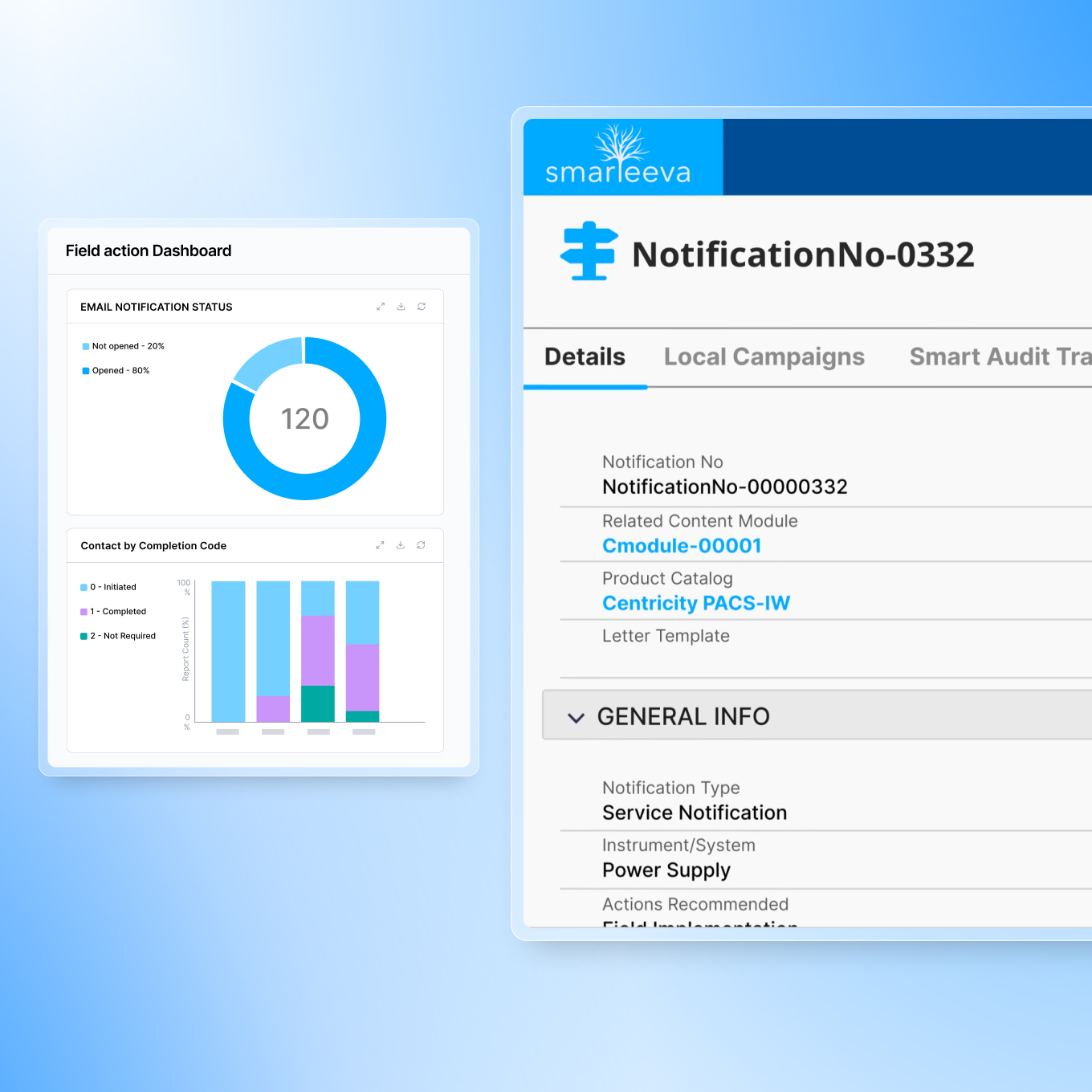
Smarteeva's Recall Management system puts the entire recall lifecycle in one platform - the recall decision, notification creation and approval, distribution to customers and distributors, acknowledgement tracking, follow-up, and closure with a complete audit trail.
- Notification generation with built-in approval workflows
- A dedicated portal for customers, affiliates and distributors
- Lot-level distribution and acknowledgement tracking
- Effectiveness checks tracked and evidenced in the recall file




Decision and scope
The recall record is created and linked to the affected product, lot numbers and distribution history already held in the platform. Scope comes from your own data rather than from a separately maintained list.
Notification generation and approval
Quality notices, safety alerts, field corrections and full product recall notifications are created from configurable templates. Built-in approval workflows route each one for review and authorisation before anything leaves the building.
Distribution to the right recipients
Notifications are distributed to customers, affiliates, distributors and field service teams through Smarteeva's cloud distribution. Distribution lists are held in the platform, so coverage is derived from your records rather than rebuilt for each event.
Acknowledgement, follow-up and escalation
Recipients respond through a dedicated portal. Acknowledgements, actions taken and follow-up information are captured against the original record instead of arriving as email replies that somebody has to collate. Automated reminders go to recipients who have not responded, and the system alerts your team when follow-up is overdue.
Effectiveness checks
Notifying is not the same as resolving. Effectiveness checks are tracked against the recall record, so the question of whether the recall achieved what it set out to achieve is answered with evidence rather than an assertion.
Closure with the file already assembled
Every action is logged as it happens: when notifications were created, who approved them, when they were distributed, who received them, who acknowledged them, what actions were taken, and how effectiveness was verified. The recall file is complete at closure rather than reconstructed afterwards.

Recall Notification Generation & Approval

Lot-Level Distribution

Recall Management Portal

Follow-Up Tracking

Effectiveness checks

Complete audit trail
THE Hospital and Distributor side
Recalls fail at the receiving end, not the sending end.
Smarteeva's primary research with healthcare providers identified six structural failures in recall communication between manufacturers and hospitals: volume overload, generic notices, duplicate notifications, missing context in follow-ups, misrouted notices, and reconciliation delays.
A notification that reaches the wrong department in a hospital has not reached anyone. Most recall software stops measuring at the point of sending.
Smarteeva routes notifications to the right function inside the receiving organisation, whether that sits in Supply Chain, Materials Management or Quality. Reconciliation between hospitals and manufacturers runs inside the platform rather than over email.
MedTech Recalls Gateway is Smarteeva's recall tracking and management resource for the provider side of that exchange.


What to look for in recall management software


