
UNIFIED COMPLAINT INTAKE
Every Complaint. Every Channel. One Platform.
Smarteeva captures complaints from email, phone, web forms, field service, customer portals, partner submissions, and Salesforce Service Cloud cases, bringing every complaint into a single AI-powered system where nothing falls through the cracks.
- Every channel captured automatically
- Duplicates identified and consolidated by AI
- One complete record, regardless of source
Trusted by 450+ MedTech companies of every size






The multichannel problem
One customer. Four systems. Four records. No one knows they're related. The regulatory clock is already running.
How Smarteeva eliminates the multichannel problem.

Captures every channel
Email, phone, web forms, field service reports, customer portals, partner submissions, and Salesforce Service Cloud cases, all captured automatically into one system.

Identifies duplicates instantly
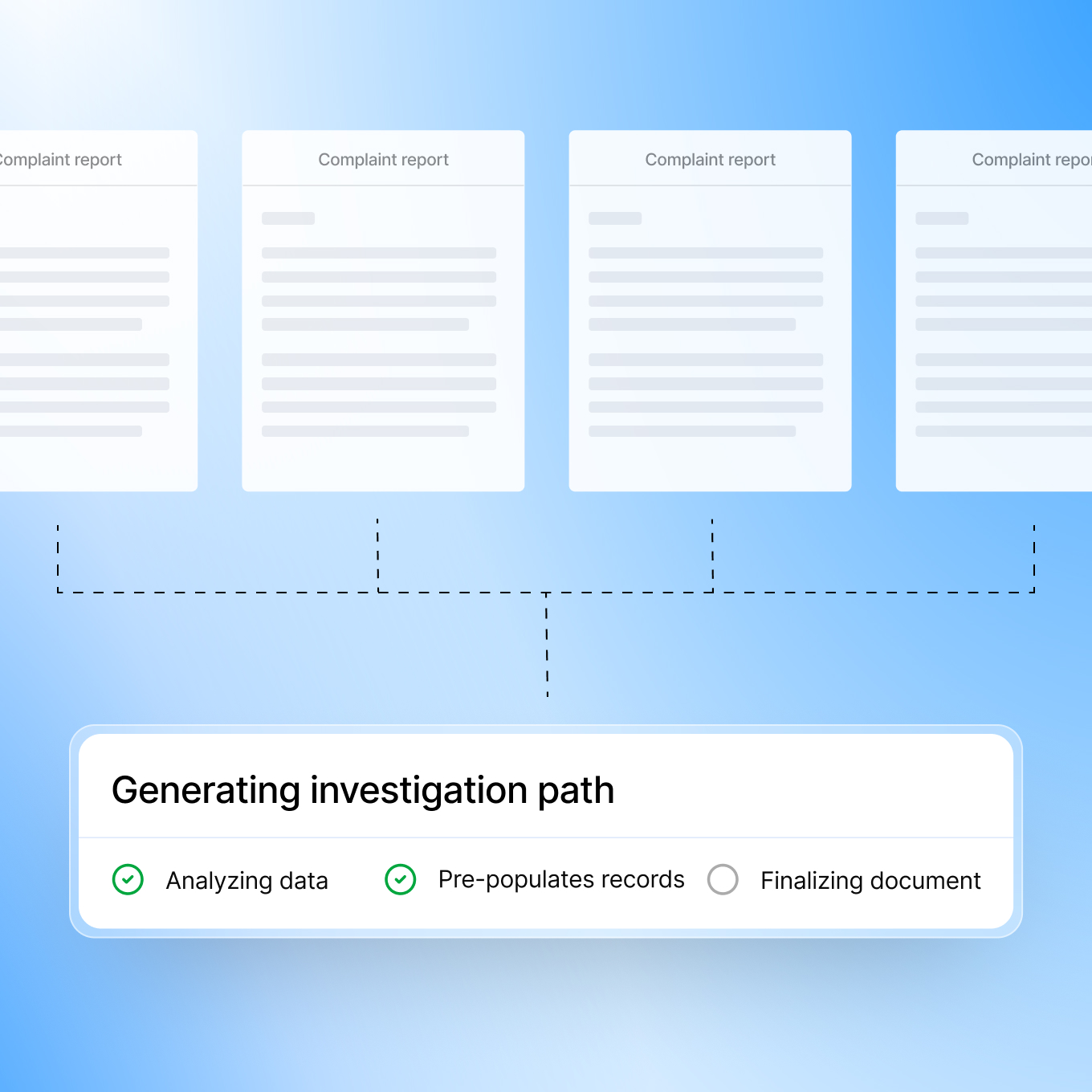
AI recognizes when multiple reports describe the same complaint event, regardless of channel or level of detail, and flags them for consolidation.

Creates one complete record
All information from all channels is extracted and merged into a single complaint record. No gaps, no disconnected threads, no missed reportability triggers.
- Email — Complaints arriving by email are captured, parsed by AI, and converted into structured complaint records. Key data fields are extracted automatically from the email body and attachments. No more copying and pasting from Outlook.
- Phone — Call-based complaints are logged directly in Smarteeva with structured data capture. AI assists the intake agent with real-time classification suggestions and automated field population based on the conversation.
- Web Forms — Smarteeva's configurable web forms capture complaint data in a structured format directly from your website. Submissions flow into the system immediately — no manual re-entry required.
- Customer Self-Service Portal — Give your customers a dedicated portal to submit complaints, upload supporting documentation, and track the status of their submissions. Structured intake ensures you get complete information at the point of submission.
- Partner & Distributor Submissions — Your affiliates and distribution partners submit complaints through a self-service portal designed for their workflow. Data flows into your complaint system in the same format as every other channel — consistent, structured, and ready for triage.
- Field Service — Field engineers and service technicians submit complaints from the field through mobile-accessible forms. On-site observations, device information, and photos are captured in real time and linked to the product record.
- Salesforce Service Cloud Integration — If your organization uses Salesforce Service Cloud for customer support, Smarteeva integrates natively. Service cases identified as product complaints are routed into the complaint management workflow automatically — no duplicate entry, no lost context.
AI Turns Chaos Into Clean Data
When complaints arrive from different channels in different formats, the data quality problem is enormous. Emails contain unstructured narrative text. Phone logs have inconsistent detail levels. Web forms capture structured fields but may miss nuance. Field reports vary by the individual who writes them.
Smarteeva's AI normalizes all of this:
- Data Extraction — NLP reads unstructured complaint narratives and extracts key data fields: product information, complaint type, date of event, patient involvement, device identifiers, lot numbers, and more.
- Auto-Population — Extracted data is used to auto-populate the complaint record, dramatically reducing the manual data entry your team performs at intake.
- Duplicate Detection — AI identifies when multiple submissions relate to the same event. Duplicate records are flagged before they clog your queue — and linked so your team has the complete picture.
- Translation — Complaints received in foreign languages are automatically translated into English while preserving the original text for regulatory accuracy.
- Classification & Routing — Every incoming complaint is classified by type and severity, then routed to the appropriate team based on your configurable business rules — all within seconds of receipt.
